Batteries & Chargers

Forklift Batteries and Chargers in Laos

Power matched to your truck, your shifts and your site.

What decides the right battery and charger

Choosing battery and charger

The truck's data plate, your working hours and the charger all have to agree.

Read more

Planning charging for your shifts

A charging routine built around your shifts keeps trucks available and batteries healthy.

Read more

A safe charging area

Ventilation, protective equipment and a planned layout for charging lead-acid batteries.

Read more

Battery care in hot conditions

Daily habits that protect batteries in the Lao heat.

Read more

Choosing battery and charger

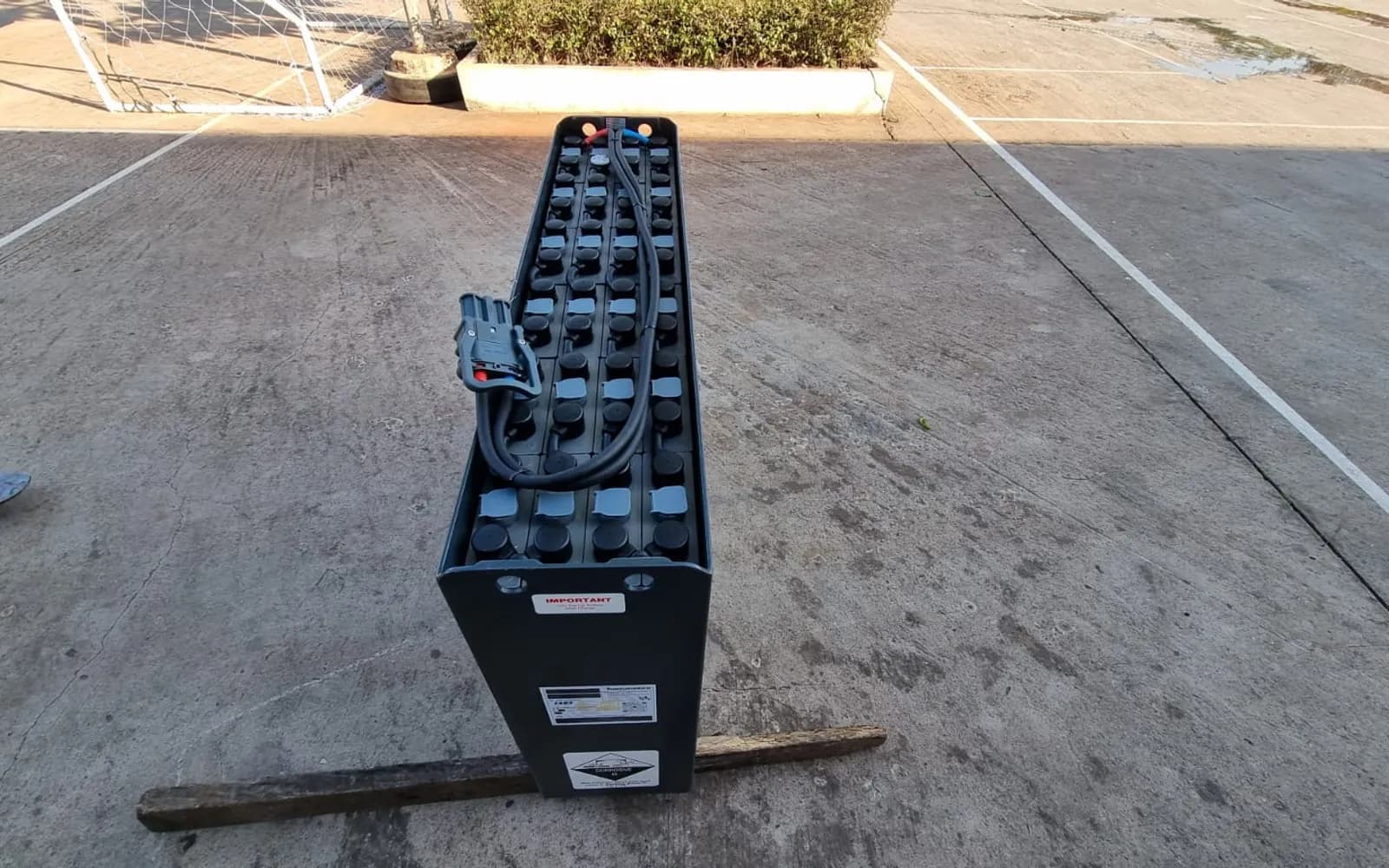
A forklift battery is part of the truck's design: its voltage, size and weight are set by the manufacturer, and in many electric trucks it also works as counterweight. The right choice starts with the truck's data plate, not with the lowest price.

common forklift battery voltages
24–80 V

Read the data plate first

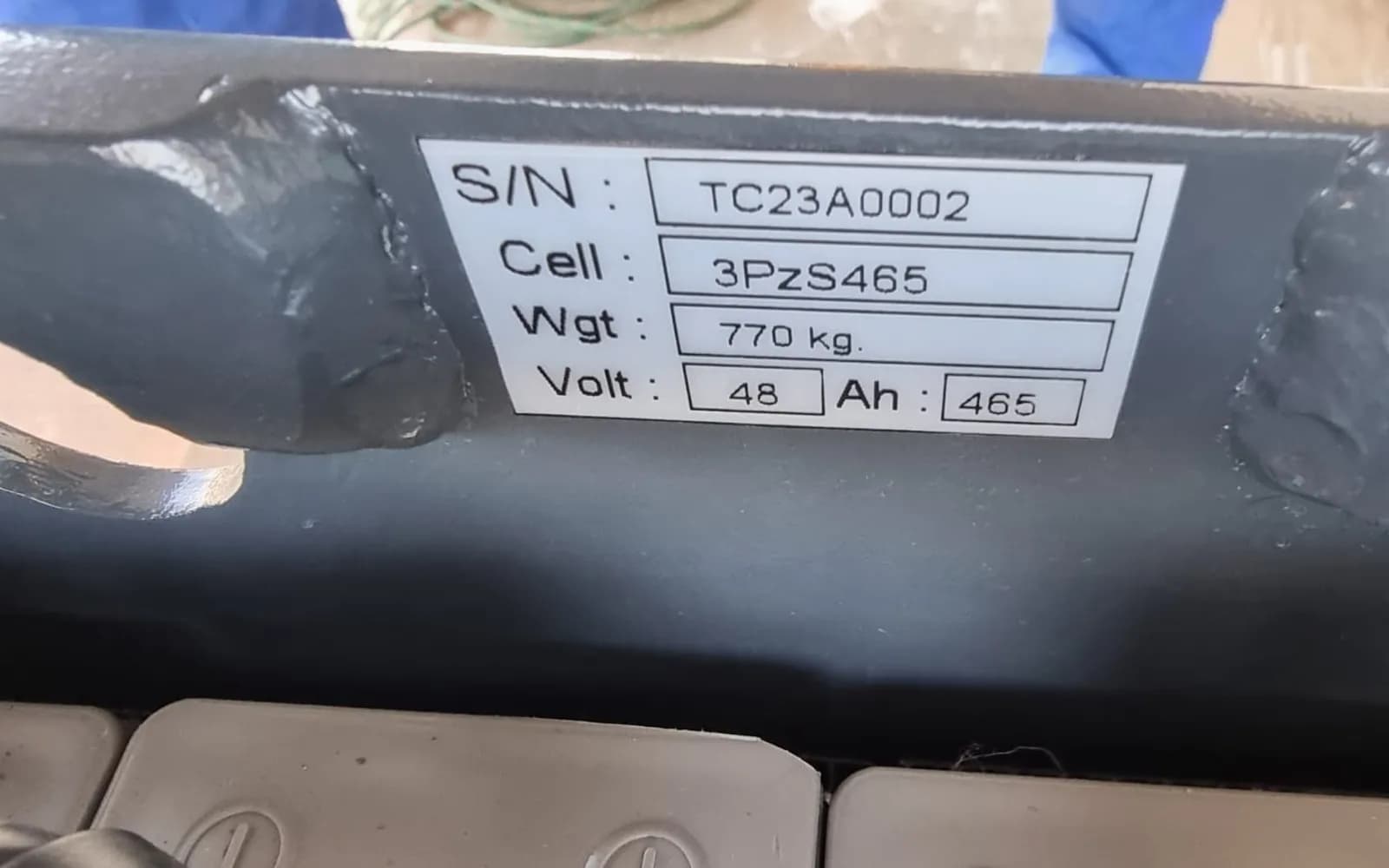
The truck's data plate lists the battery voltage and the minimum battery weight. A lighter battery than specified reduces the truck's stability, and its rated capacity no longer applies. Send us the plate, or a photo of it, with your request.
Size the battery for the shift

Battery capacity, in ampere-hours, decides how long the truck works between charges. Two trucks of the same model can need different batteries when one runs a light single shift and the other lifts all day.

The charger must match the battery

A charger is built for one voltage and one battery type, and sized for the battery's capacity. An undersized charger never finishes the charge; the wrong charging profile shortens battery life. Check the charger whenever the battery changes.

Send us with your request

  • Forklift brand, model and serial number
  • Battery voltage and capacity, from the battery label
  • Charger model and output
  • Hours per shift and shifts per day

Planning charging for your shifts

How you charge matters as much as what you buy. A lead-acid battery charged at random moments and run flat wears out years early; a charging plan built around your shifts keeps trucks available and batteries healthy.

work on one lead-acid charge
8 h
to charge fully
8 h
to cool before use
8 h

One shift, one battery

For a single shift, one lead-acid battery per truck is usually enough: work the shift, charge it fully, then let it cool before the next morning. This is the classic 8-8-8 pattern of work, charge and rest.

Two or three shifts

When trucks work around the clock, one battery has no time to charge and rest. The options are a second battery per truck with a changing point, or batteries and chargers built for charging in breaks. Tell us your hours and we say which fits.

Habits that shorten battery life

Topping up a lead-acid battery for a few minutes at every break adds charge cycles and heat, and running it below about 20% charge strains it. Put it on charge at around 20–30% and let the charge finish.

Signs your charging routine needs a review

  • Trucks slow down or lose lift power late in the shift
  • Batteries are hot when they come off charge
  • Charges are stopped before they finish
  • Operators charge whenever they like

A safe charging area

Lead-acid batteries give off hydrogen while they charge and contain sulphuric acid. A charging area does not need to be large, but it needs to be planned before the first battery is connected.

hydrogen in air that can ignite
4%

Fresh air and no sparks

Hydrogen is lighter than air and can ignite at about 4% in air. Charge in a well-ventilated area, keep flames, smoking and grinding away, and switch the charger off before connecting or disconnecting a battery.

Protection for people

Anyone who waters or handles batteries needs eye protection, gloves and an apron, with an eyewash station or clean running water close by. Acid spills are neutralised and cleaned up, not washed into drains.

Power supply and layout

Chargers need a suitable electrical supply and room for trucks to park and connect without blocking aisles. Barriers keep trucks from hitting chargers and cables. Tell us your available power supply when you ask for a charger.

A charging area should have

  • Good airflow, with no ceiling pockets where gas collects
  • No-smoking signs and no open flames
  • An eyewash station or clean water nearby
  • Eye protection, gloves and an apron
  • A spill kit for battery acid
  • Barriers between trucks and chargers

Battery care in hot conditions

Heat is the main enemy of forklift batteries in Laos. A battery that runs hot every day loses capacity sooner, and a lead-acid battery also loses water faster. A few minutes of care each day protects one of the most expensive parts of the truck.

Water after charging, not before

Lead-acid batteries use water while they charge. Top them up with distilled or deionised water after a full charge, to the level the maker marks. Filling before charging can make the electrolyte overflow.

Keep it clean and cool

Dirt and spilled electrolyte on the battery top carry current and corrode terminals. Wipe the top, keep vent caps closed, charge in shade with good airflow, and let a hot battery cool before it goes on charge.

Equalise and test

A periodic equalising charge balances the cells of a lead-acid battery, as the maker advises. Measuring cell voltage or specific gravity finds a weak cell before it stops the truck. Battery checks can be part of your service visits.

Daily and weekly care

  • Check the water level after charging, as the maker advises
  • Wipe the battery top and terminals
  • Look for damaged cables and plugs
  • Report a battery that runs hot or charges slowly

Ask for a recommendation

Load, lift height, site and timing, for example: 2.5 t forklift, 4.5 m lift, 3 months, warehouse in Vientiane.

0 / 1,200

Keep electric fleets running

Battery service

Watering, equalising charges and charger checks that keep lead-acid batteries healthy.

View details

Spare parts

Other parts your electric trucks need: filters, tyres, forks and safety devices.

View details

Electric forklifts

Quiet trucks with no exhaust fumes, suited to indoor warehouses and food handling.

View details

Related solutions

Forklift Rental

Short and long term forklift rental.

View details

Warehouse Equipment

Racking, handling and site survey.

View details

Get your quotation

Tell us what you need and we reply with a quotation.